




BY  GENN
GENN
2026/05
Blog
NM400 steel plate VS overlay wear-resistant plate
In industries with high wear requirements, such as mining, coal, and cement, NM400 steel plates and overlay wear-resistant plates are the two most commonly used materials.
However, many purchasers often confuse the appropriate application scenarios for the two, leading to incorrect product selection and increased usage costs.
What is the difference between the NM400 Steel Plate and the Overlay Wear-Resistant Plate
1. NM400 Steel Plate: Single-Material Plate with Uniform Wear Resistance
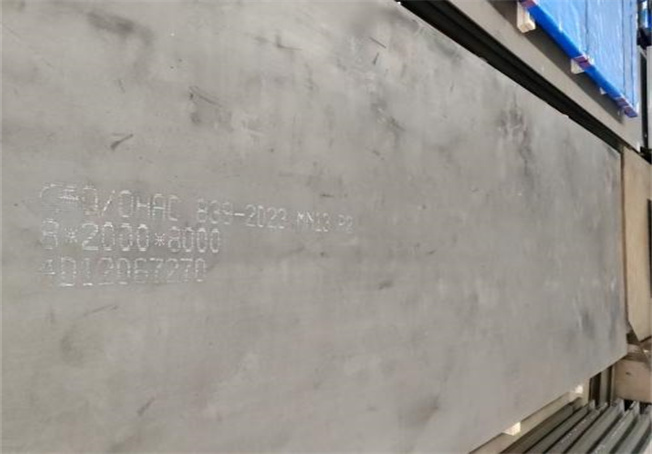
Material Properties: The NM series is a national standard grade of wear-resistant steel. NM400 belongs to high-strength wear-resistant steel and is a single-material steel plate. Its hardness and wear resistance are enhanced through overall alloying, such as adding manganese and chromium, with a hardness of approximately 36–40 HRC.
Manufacturing Process: Produced by hot rolling or quenching & tempering, it does not require an additional welded wear-resistant layer, and the plate exhibits uniform performance throughout.
2. Overlay Wear-Resistant Plate: Bimetal Composite Plate with Localized Wear Resistance
Material Properties: This is a bimetal composite structure, consisting of a regular carbon steel base plate and a welded wear-resistant layer made of chromium carbide or similar alloys. The hardness of the wear-resistant layer can reach 58–65 HRC, while the base plate ensures toughness and strength.
Manufacturing Process: The wear-resistant alloy layer is welded onto the surface of the base plate using processes such as submerged arc welding or open arc welding. The wear layer is metallurgically fused with the base plate, providing high bonding strength.
Which Material to Choose for Different Working Conditions?
1. Scenarios Where NM400 Steel Plate is Preferred
- “Medium-to-low wear + High impact conditions”
Examples: loader buckets, excavator teeth, coal reclaimer frames in mining.
These scenarios require not only wear resistance but also the ability to withstand ore impact. The toughness of NM400 helps prevent fractures. - “Complex-shaped parts or fabrication needs”
Examples: irregular wear parts, bent chutes, large equipment requiring welded assemblies.
NM400 has good machinability and can flexibly adapt to various structural designs. - “Limited budget + Short-term use”
Examples: temporary projects, low-load conveyor equipment.
In such cases, NM400 offers a high cost-performance ratio, meeting basic wear requirements without excessive investment.
2. Scenarios Where Overlay Wear-Resistant Plate is Preferred
- “High wear + Low impact conditions”
Examples: tailings pipelines in mining, raw material mill liners in cement plants, coal scraper conveyor liners, mid-section chutes.
These scenarios are dominated by abrasive wear. The high hardness of the welded layer significantly extends service life and reduces downtime. - “Critical core parts of key equipment”
Examples: loader and bulldozer buckets, electric shovels, mill guards, material chutes, crusher parts and liners.
These parts are difficult to replace, and downtime is costly. The long life of overlay wear-resistant plates reduces overall operating costs. - “Large-area continuous wear resistance needs”
Examples: large silo inner walls, long-distance conveyor chutes.
Overlay plates can be customized in wear layer thickness (e.g., 4–50 mm) to match varying wear intensities, providing strong overall stability.