



BY  GENN
GENN
2026/09
Blog
How to Choose NM450 Steel for Heavy-Duty Machinery
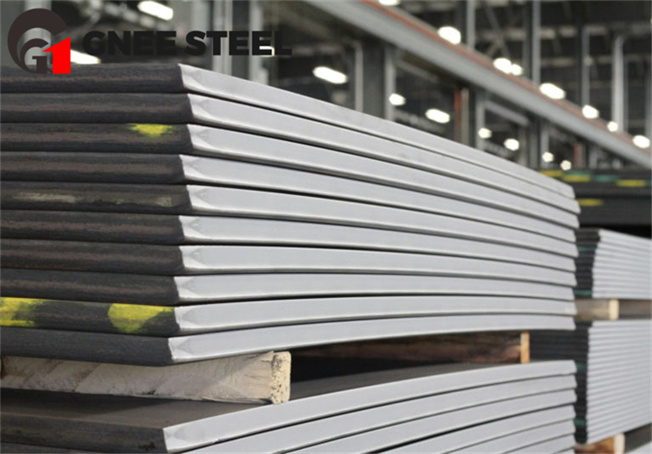
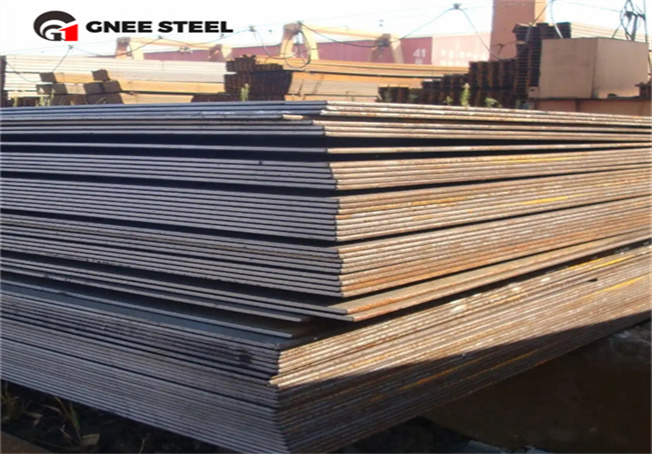
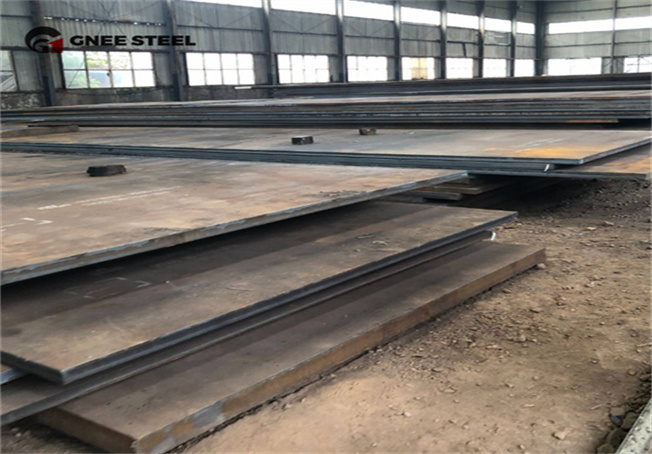
NM450 steel is a high-strength abrasion-resistant steel widely used for heavy-duty machinery. Compared with NM400, it provides a higher hardness level for more severe wear conditions, while remaining a practical option when fabrication and impact resistance are also important.
For equipment manufacturers looking for a balance between wear resistance and processability, NM450 wear resistant steel plate is an important grade to evaluate.
What Is NM450 Wear Resistant Steel Plate?
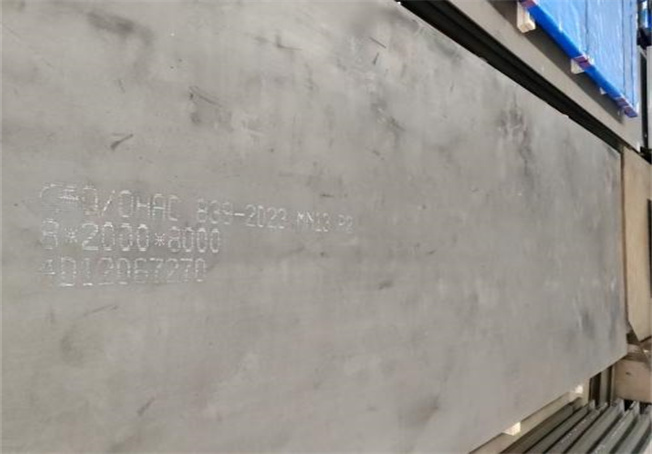
NM450 steel plate is covered by GB/T 24186-2022, High Strength Abrasion Resistant Steel Plate, Sheet and Strip for Construction Machine. The current standard applies to wear-resistant steel used for construction, mining, agricultural and other machinery applications.
The “450” in NM450 identifies its nominal Brinell hardness level. Under GB/T 24186-2022, NM450 plates up to 80 mm thick have a specified surface hardness of 420–480 HBW. For thicknesses above 80 mm and up to 120 mm, the specified surface hardness is 410–480 HBW.
| Property | NM450 Specification |
|---|---|
| Standard | GB/T 24186-2022 |
| Product | High-strength abrasion-resistant steel plate |
| Thickness covered by standard | Up to 120 mm |
| Surface hardness, t ≤80 mm | 420–480 HBW |
| Center hardness, t ≤80 mm | 375–480 HBW |
| Surface hardness, 80<t≤120 mm | 410–480 HBW |
| Tensile strength* | ≥1250 MPa |
| Elongation* | ≥8% |
*Tensile strength and elongation are optional requirements under GB/T 24186-2022 and should be specified in the purchase contract when required.
This hardness range makes NM450 abrasion resistant steel especially suitable for components where ordinary structural steel would experience rapid material loss.
NM450 Steel Chemical Composition
The alloy design of NM450 supports hardenability, wear resistance and mechanical performance. Typical maximum composition limits specified for standard NM450 under GB/T 24186-2022 include:
| Element | NM450 Max. % |
|---|---|
| C | 0.35 |
| Si | 0.70 |
| Mn | 1.70 |
| P | 0.025 |
| S | 0.010 |
| Cr | 1.40 |
| Ni | 0.80 |
| Mo | 0.55 |
| Ti | 0.05 |
| B | 0.0005–0.006 |
When purchasing NM450 steel plate for heavy-duty machinery, chemical composition should be checked together with hardness, plate thickness, delivery condition and the required fabrication process rather than using hardness alone as the selection criterion.
How to Choose NM450 Steel for Heavy-Duty Machinery
1. Match NM450 Steel to the Wear Condition
The first question is not simply “How hard should the steel be?” but “What type of wear will the component experience?”
For components exposed to continuous sliding abrasion from ore, stone, sand or other bulk materials, increasing hardness generally helps reduce surface material loss. Typical NM450 steel applications include dump truck liners, excavator bucket components, hoppers, chutes, crusher components and other wear plates used in construction and mining machinery.
Where the component also receives repeated impact, hardness should be considered together with toughness and structural design.
This is one reason NM450 wear resistant steel is frequently positioned between NM400 and NM500: it provides a higher hardness level than NM400 without automatically moving to the harder NM500 grade.
NM400 vs NM450 vs NM500 Wear Resistant Steel
The following GB/T 24186-2022 hardness ranges provide a clearer basis for grade selection.
| Grade | Plate Thickness | Surface Hardness |
|---|---|---|
| NM400 | ≤80 mm | 370–430 HBW |
| NM450 | ≤80 mm | 420–480 HBW |
| NM500 | ≤70 mm | 470–540 HBW |
NM400 steel plate can be considered where fabrication flexibility and moderate abrasion resistance are important.
NM450 steel plate is suitable when equipment requires a step up in abrasion resistance while still demanding practical cutting, forming and welding.
NM500 steel plate provides a higher hardness range for particularly severe abrasive wear, but the harder grade can place greater demands on machining and fabrication.
Therefore, selecting NM500 simply because it has a higher hardness number is not always necessary. For many heavy-duty wear components, NM450 abrasion resistant steel plate provides a useful middle range between wear life requirements and manufacturing considerations.
2. Select the Correct NM450 Plate Thickness
Plate thickness should be determined by both wear allowance and structural loading.
A thicker plate does not automatically provide better machinery performance. Excess thickness increases component weight and may affect payload, energy consumption and fabrication cost.
For wear liners, chutes and hoppers, the design should consider the expected wear rate and replacement interval. For buckets, truck bodies and structural wear parts, bending loads, impact loads and supporting structure must also be calculated.
When ordering NM450 steel plate, specify the final component dimensions whenever possible so that cutting and machining can be planned before delivery.
3. Consider NM450D or NM450E for Low-Temperature Service
For machinery operating in cold environments, the low-temperature toughness grade should also be specified.
GB/T 24186-2022 includes NM450D and NM450E. The D grade is associated with impact testing at -20°C, while the E grade is tested at -40°C. For thicknesses up to 80 mm, the specified longitudinal impact energy for these grades is at least 24 J; requirements change for heavier sections.
This distinction is important for mining trucks, excavators and other heavy machinery used in cold regions where both abrasion and impact loading are present.
4. Check Cutting, Welding and Bending Requirements
Because NM450 wear resistant steel plate has significantly higher hardness than conventional structural steel, fabrication procedures should be planned before production.
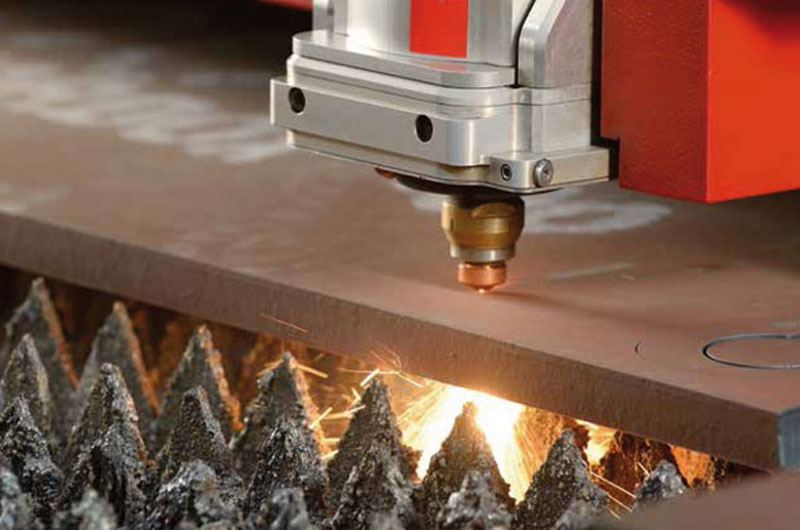
Plasma, laser and flame cutting can be selected according to plate thickness and component geometry. Welding procedures should consider plate thickness, carbon equivalent, heat input, joint restraint and working temperature. Low-hydrogen welding consumables and suitable preheating procedures may be required depending on the actual fabrication conditions.
For bending or forming, the bending direction, plate thickness, bend radius and tooling should be confirmed before processing.
Instead of purchasing plate first and solving fabrication problems later, machinery manufacturers can reduce production risk by specifying the finished drawing together with the NM450 material requirement.
Where Is NM450 Steel Commonly Used?
Because of its combination of high hardness and mechanical strength, NM450 steel for heavy-duty machinery can be processed into wear components for:
- Excavator buckets and bucket wear parts
- Mining truck bodies and liners
- Hoppers and material-handling chutes
- Crusher and screening equipment components
- Bulldozer and construction machinery wear parts
- Quarrying and mining equipment
- Recycling and bulk-material handling machinery
For these applications, the objective is not simply to use the hardest available steel. The objective is to select a wear plate that matches the actual combination of abrasion, impact, thickness and fabrication requirements.
How to Purchase NM450 Steel Plate
A complete NM450 steel plate RFQ should include the required grade, standard, plate thickness, width, length, quantity, delivery condition, hardness requirement, impact requirement and processing drawing.
For project procurement, buyers may also request MTC documentation, chemical composition, hardness test results, dimensional inspection and third-party inspection according to the contract.
Gnee can supply NM450 wear resistant steel plate for mining, construction and heavy-equipment projects, together with cutting, bending, welding and customized component processing. EN 10204 inspection certificates and third-party inspection requirements can also be discussed according to the project specification.
If you are comparing NM400, NM450 and NM500 steel plate, send us your working conditions, plate thickness, component drawing and required quantity. Our team can help match the material specification and processing route to your heavy-duty machinery application.